Duck eggs
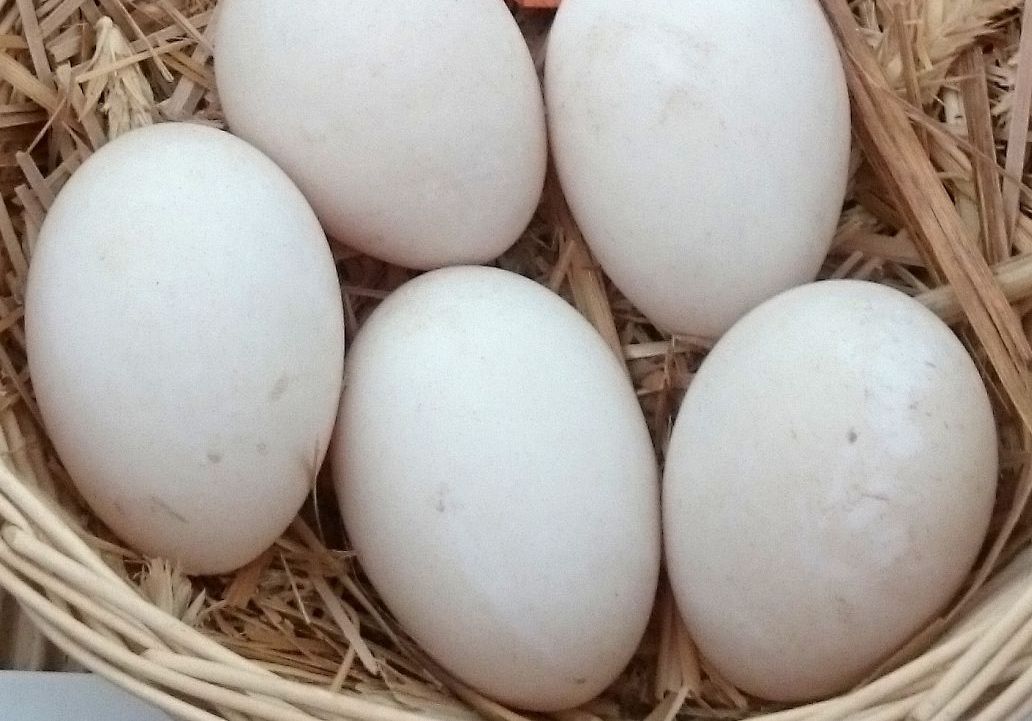
A duck egg is bigger than a hen's egg, and it takes longer to cook. The advice on eating one is stricter too.
Cooking them
Great British Chefs suggests using a duck egg much as you would a hen's egg. You can fry it, poach it, boil it or scramble it. A duck egg has more yolk to white than a hen's egg, and the yolk turns a richer, reddish orange when cooked.
Ireland's food safety authority says a duck egg is heavier and larger than a hen's egg, so it needs more cooking time. It advises cooking a duck egg until both the white and the yolk are solid.
Great British Chefs says duck eggs are commonplace in the cooking of the Philippines, Vietnam, China and Malaysia.
Using them in a recipe
The US Department of Agriculture (USDA) lists one duck egg at about 70 g. It puts a large hen's egg at about 50 g and a medium one at about 44 g. Those are American sizes.
On those weights, one duck egg holds about as much as 1.4 large or 1.6 medium American hen's eggs. We worked those two ratios out from the USDA numbers.
UK packers grade hen's eggs by their weight in the shell. To swap duck eggs into a recipe, crack them into a bowl on the scales and match the weight of the hen's eggs it was written for.
Storing and freezing
The Food Standards Agency (FSA) advises keeping eggs in a cool, dry place, ideally in the fridge. Food Standards Scotland suggests keeping them away from other foods, and says your fridge's egg tray helps with that.
Spare eggs can be frozen. The FSA's home food fact checker suggests cracking them into a container, then sealing and freezing it. You can separate the yolks from the whites first if you prefer. Label each container so you know what is in it.
Ireland's food safety authority asks people to wash their hands, utensils and worktops after handling raw duck eggs.
Why the advice says to cook them through
The FSA gives advice to caterers in England, Northern Ireland and Wales. Under the heading "Duck, goose and quail eggs", it writes the following.
"Eggs from species other than chickens carry a higher risk of Salmonella and should not be used in raw or lightly cooked dishes. They should always be cooked thoroughly before being served."
Food Standards Scotland published the same words for Scottish caterers. The FSA says vulnerable groups can eat raw or lightly cooked eggs with a British Lion mark or from the Laid in Britain scheme. That advice is for hen eggs only.
The NHS lists "raw or undercooked goose, duck and quail eggs" among the foods to avoid in pregnancy. It also says duck, goose and quail eggs "can be eaten if they're well-cooked".
Useful links
- Advice on safe storage, handling and use of eggs for catering (Food Standards Agency)
- Home food fact checker (Food Standards Agency)
- Foods to avoid in pregnancy (NHS)
- Egg advice for caterers in Scotland (Food Standards Scotland)
- Food storage at home (Food Standards Scotland)
- Egg marketing standards (Defra)
- Grading of Class A eggs by weight (legislation.gov.uk)
- Advice on the safe consumption of duck eggs (Food Safety Authority of Ireland)
- FoodData Central (US Department of Agriculture)
- Duck egg recipes (Great British Chefs)
- Eggs: storing and freezing (Love Food Hate Waste)
Photo: Dirk Ingo Franke, CC BY-SA 4.0, via Wikimedia Commons (cropped and resized)
